For small commercial property management firms
Run CAM reconciliations without the spreadsheet.
Vespy runs the full recovery waterfall, keeps a trace of every step, and holds the lease terms behind it.
14-day free trial · No credit card
Works with
- AppFolio exports
- CSV and rent rolls
- QuickBooks Online
- Stripe
- Claude and ChatGPT
CAM reconciliation
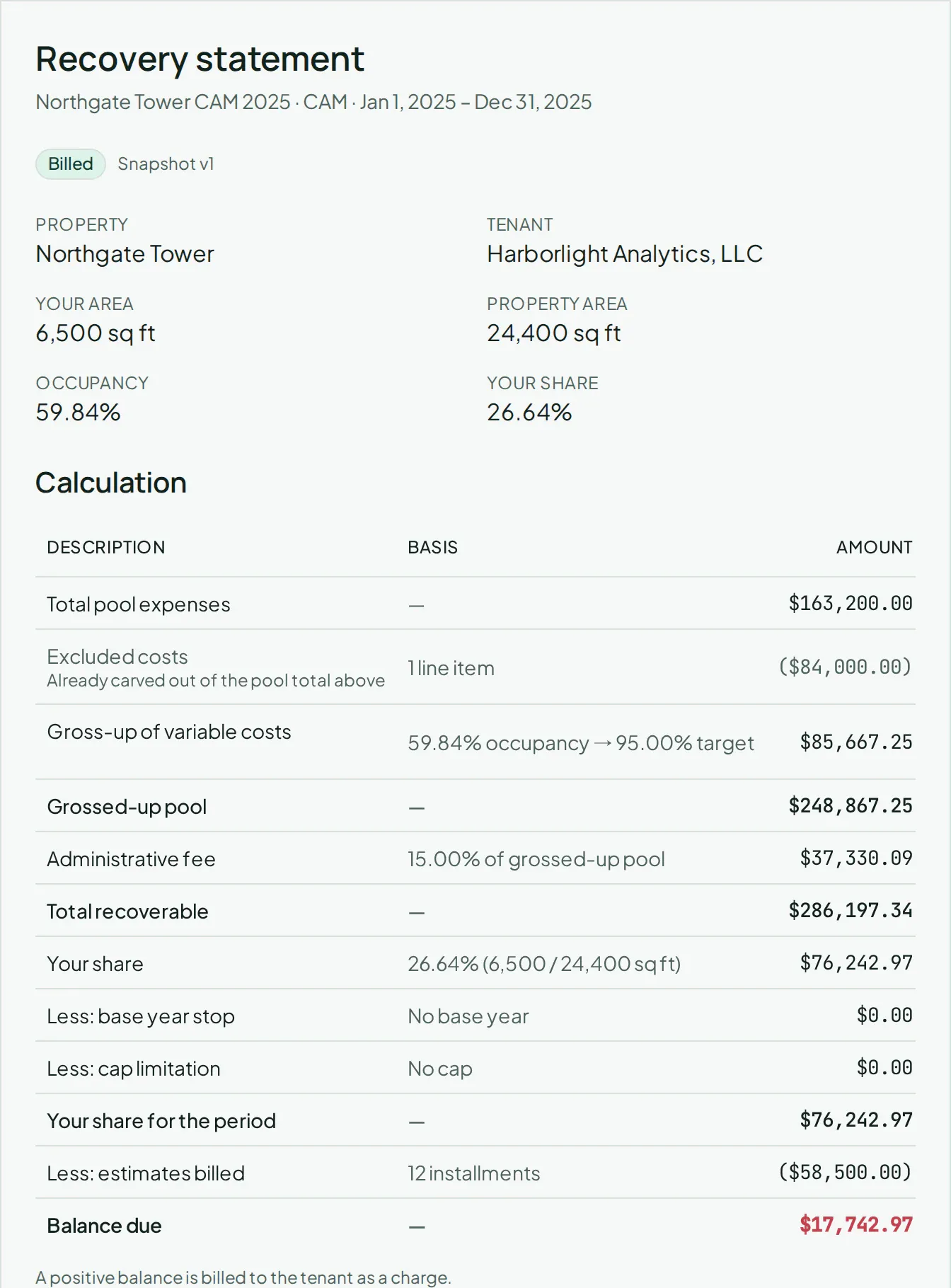
Reconcile a whole pool at once.
Attach the leases and run the waterfall. Gross-up, base year, caps, and estimates apply in the same order, every time.
- Pro-rata share by area, fixed percent, or fixed amount
- Balance due or credit issued through commercial AR
- Approved statements are frozen for the tenant audit
Lease administration
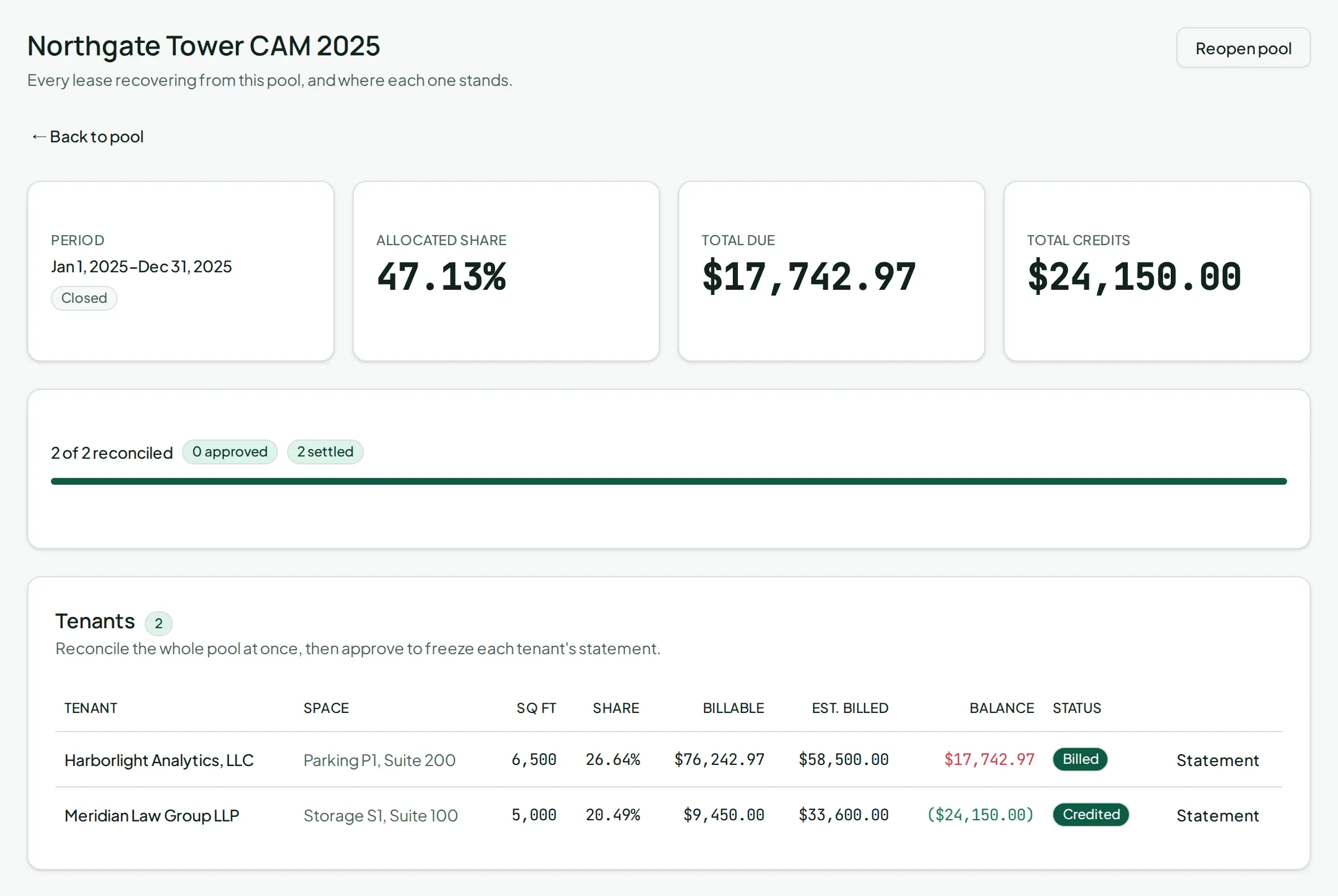
The lease is the record, not a PDF.
Every amendment writes a new version and rewrites future billing. Options and critical dates carry an owner, a status, and a reminder.
- Versioned abstracts with full amendment history
- Renewal, termination, expansion, and ROFR options
- Reminder alerts before each notice window
Escalations and percentage rent
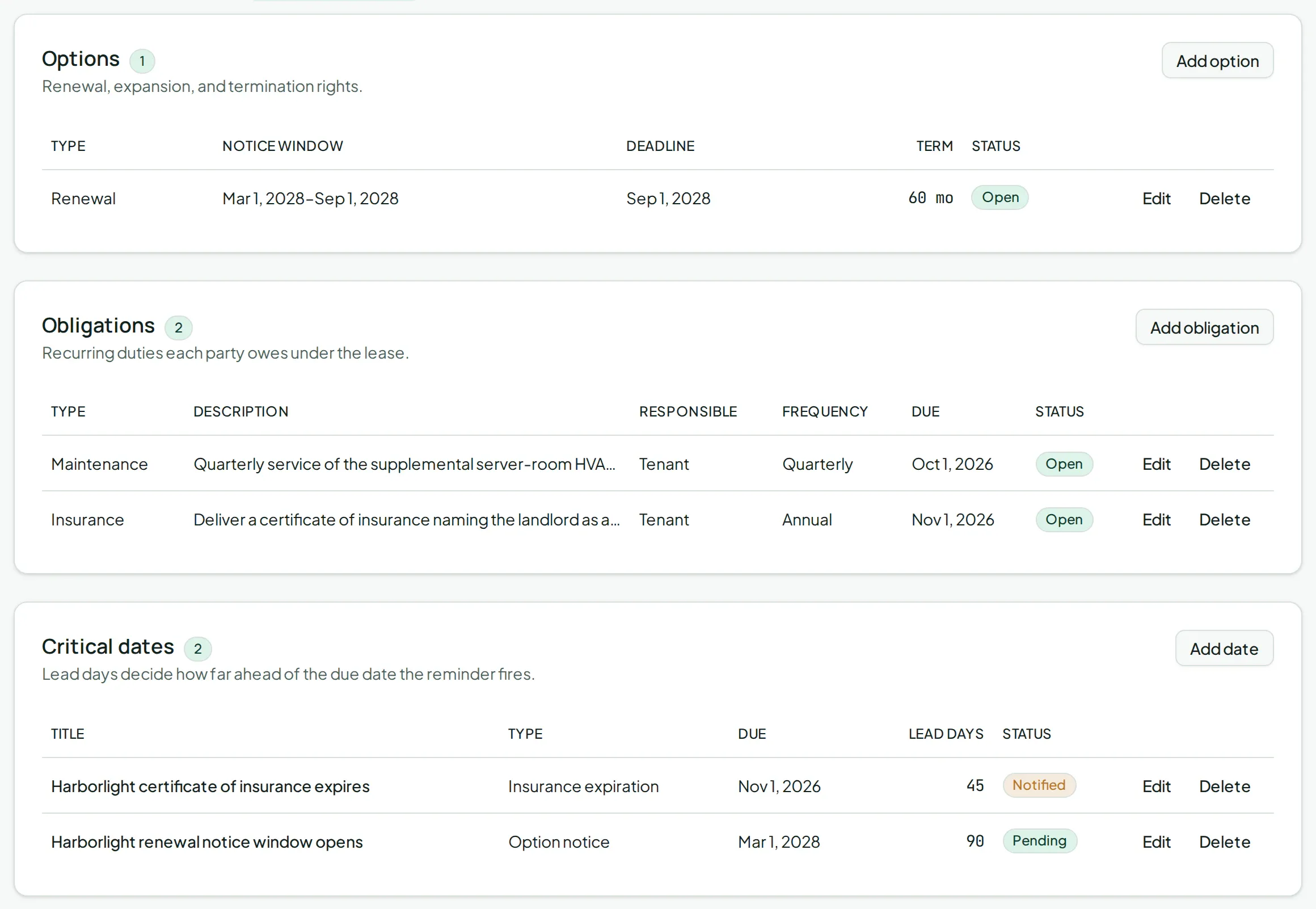
Rent steps and true-ups, written for you.
Fixed and CPI escalations write future rent steps. Recorded tenant sales drive percentage rent against natural or artificial breakpoints.
- CPI escalations with a floor and a cap
- Annual percentage rent true-up from recorded sales
- Every charge posts to a double-entry ledger
The calculation trace
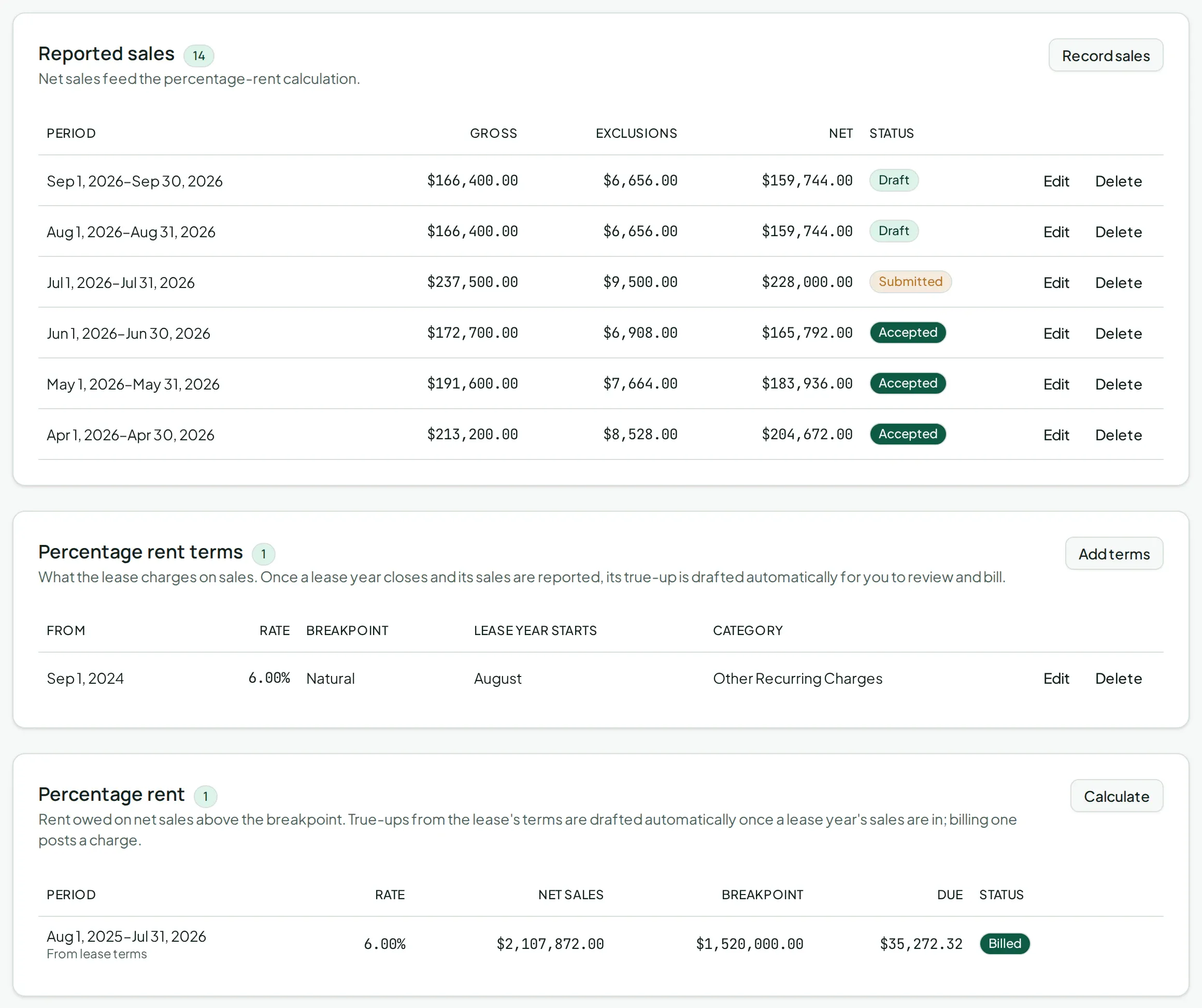
Every number shows its work.
Eight steps in a fixed order, each kept on the reconciliation. Partial periods are prorated before estimates net out.
- 01 Pool actuals
- 02 Exclusions
- 03 Gross-up
- 04 Admin fee
- 05 Tenant share
- 06 Base year
- 07 Cap
- 08 True-up
AI, with a person in charge
AI proposes. People approve.
AI handles reading and drafting. The recovery math stays ordinary, testable arithmetic.
-
Lease abstraction
Upload a lease and Vespy proposes the abstract, each field quoting the lease. Nothing is saved until you approve it.
How abstraction works -
Maintenance triage
Tenant messages become proposed work orders and replies in a review queue. Anything sent to a person needs approval.
-
Claude and ChatGPT
Connect your AI assistant over MCP with the scopes you approve. Financial and lease records stay out of reach.
Questions
Before you switch.
How is Vespy different from a spreadsheet?
A spreadsheet will do the arithmetic, but it will not tell you why a number changed, keep the prior year intact, or survive the person who built it leaving. Vespy runs the recovery waterfall in a fixed order and retains a calculation trace for every reconciliation: pool actuals, exclusions, gross-up, admin fee, tenant share, base-year deduction, cap, and estimates already billed. When a tenant audits, you produce the trace instead of rebuilding the workbook.
How is Vespy different from Yardi Breeze?
Yardi Breeze is a capable product with a much longer track record, and at portfolio scale Yardi has depth Vespy does not match yet. The differences that matter for a small commercial firm are the recovery engine and how you get started. Vespy treats CAM reconciliation, percentage rent, and escalations as first-class workflows with a retained calculation trace, and you can start a 14-day trial without a sales call.
Does Vespy handle commercial leases specifically, or is it residential software?
Commercial is the primary case. Leases are modeled around suites and rentable square feet rather than units, with recovery pools, base years, gross-up, caps, percentage rent breakpoints, and CPI escalations built into the lease itself. Reports are area-based: rent roll with annualized base rent and rent per square foot, stacking and availability by square footage, and rollover and option exposure.
What does the AI actually do?
It proposes work for a person to approve. It reads a commercial lease (PDF or Word) and proposes the abstract: rent schedule, recovery terms, options, and obligations, each citing the lease text it came from. Nothing is written until someone approves it. It can also draft maintenance work orders from tenant messages, and you can connect Claude or ChatGPT to your portfolio over MCP. The recovery math itself is ordinary arithmetic, not AI, and no message to a tenant or vendor goes out without a person approving it.
Stop reconciling in a spreadsheet.
Run your first reconciliation on the free trial.
14-day free trial · No credit card